


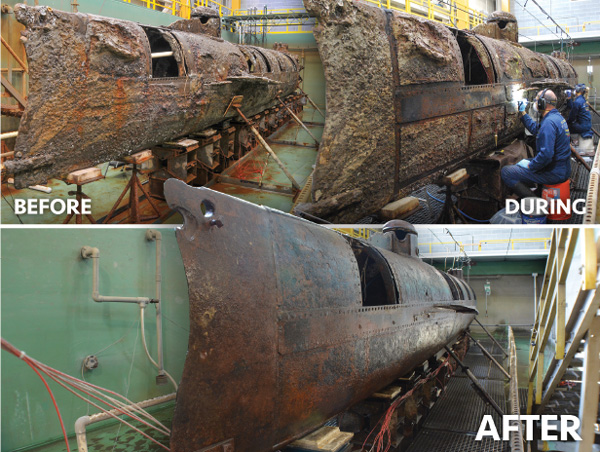
Conserving the Hunley has demanded constant innovation. Years of submersion left her iron hull encased in a thick layer of corrosion, rust, and sand. Conservators carefully removed this encrustation with hand tools without damaging the fragile metal beneath. Each artifact—from Lt. George Dixon’s gold watch to the crew’s personal belongings—has required a unique scientific approach to ensure that it endures for generations to come.
The submarine itself is a unique conservation challenge. She is being preserved with a combination of cutting-edge techniques developed by the Clemson University-led Conservation team along with soaking her in a chemical solution to leach out the corrosive salts embedded in her iron skin.
Chlorides from the seawater penetrate the iron on the molecular level. When in solution, these chlorides present no real problem. However, when exposed to air, they slowly dry in crystal form. As the crystals grow, the surface of the metal will expand and flake away, eventually reducing the artifact to a pile of iron oxide dust. The main goals of conservation, therefore, are to provide archaeologists with the proper tools and techniques to handle, store, stabilize, and study the recovered artifacts.
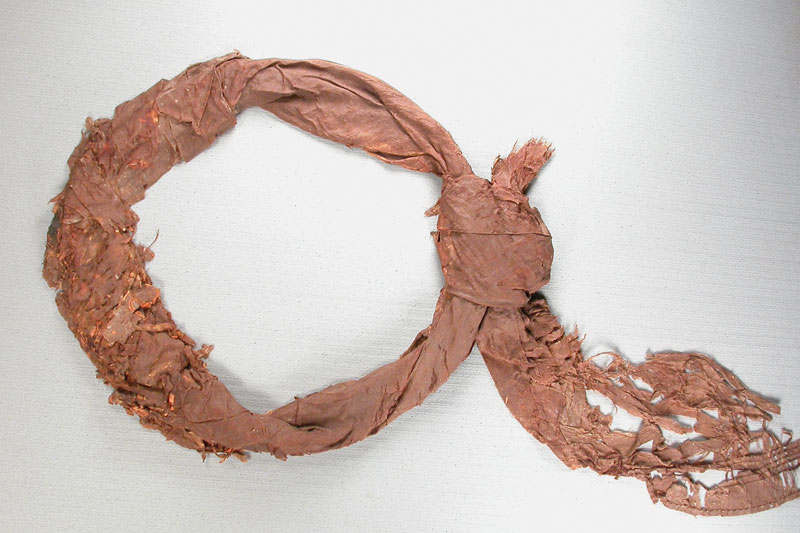
Bandana
By working closely with Mary Ballard, Senior Textile Conservator for The Smithsonian Institution, the Hunley team was able to beautifully conserve this silk bandana worn around the neck of crewmember James Wicks.
Before
After
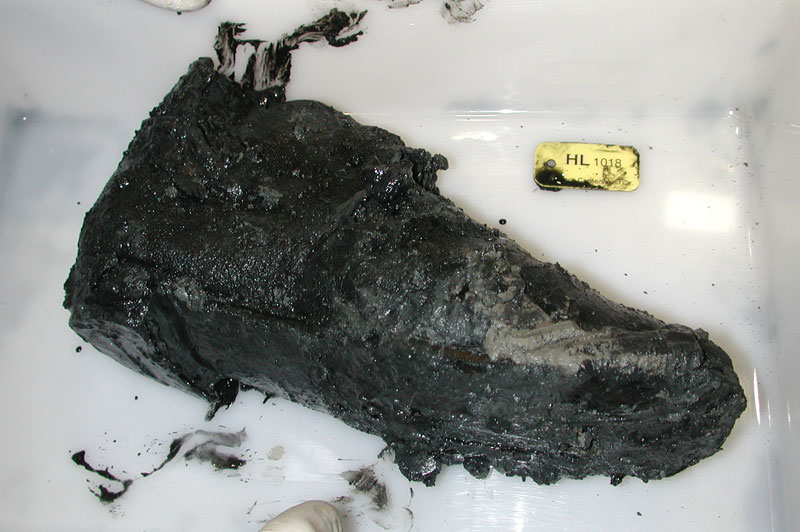
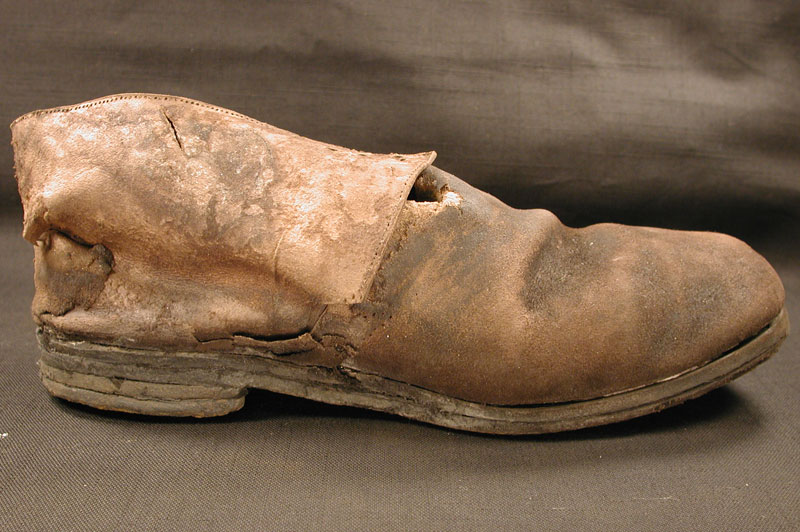
Shoe
Sixteen shoes belonging to the eight-man crew were excavated between 2001 – 2002. In some instances, the shoes were literally encapsulated by iron cement and required an enormous amount of time to free them from the submarine’s hull. Waterlogged leather is well-known for its instability when exposed to the atmosphere without a proper conservation treatment. The artifacts required careful handling and treatment since the majority of the shoes were in an advanced state of deterioration and showed various degrees of iron staining when they were removed from the submarine.
Before
After
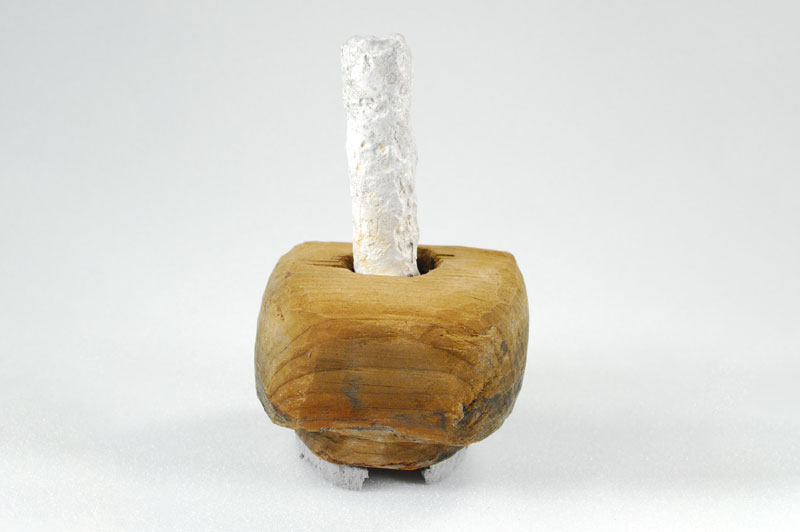
Wick
Before
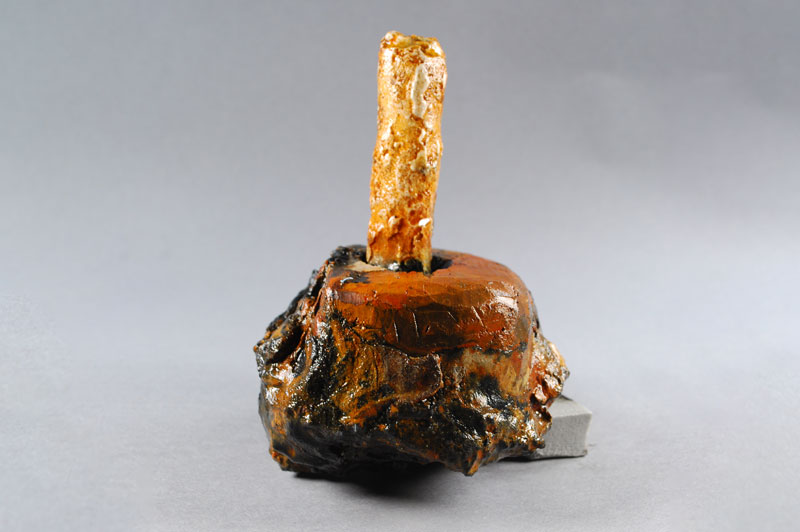
After
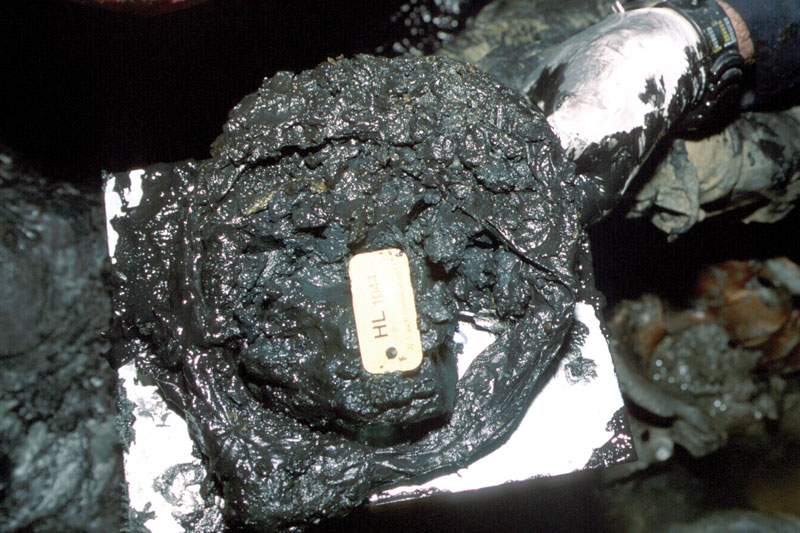
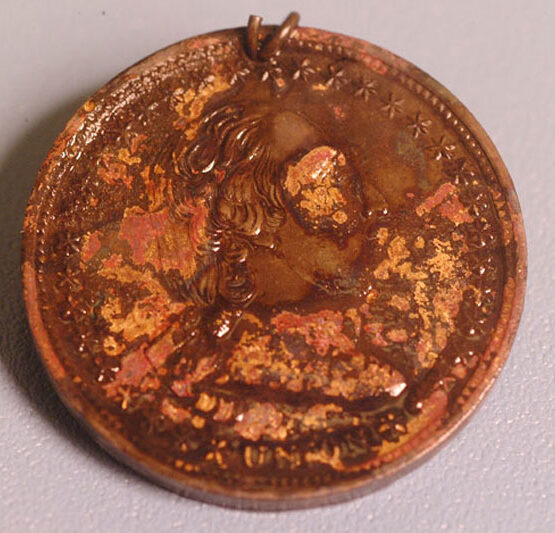
Union ID Tag
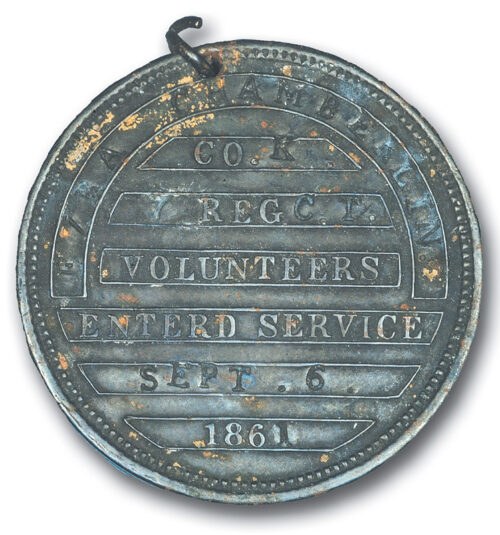
In April, 2001, a Union identification tag was discovered on the Confederate submarine, opening the door to much speculation. The tag bears the name Ezra Chamberlin with the 7th Connecticut Infantry. The mystery became more intriguing when scientists learned Chamberlin’s body was not at the site in Connecticut where a headstone commemorates his life.
Did Ezra switch sides or was he a Union spy? Was he a prisoner of war forced to help power the dangerous submarine? Ultimately, this mystery was solved when DNA identification with a descendant confirmed the crewmember wearing the ID tag was not Pvt. Chamberlin of Connecticut, but Joseph Ridgaway of Maryland.
Both gentlemen fought—on opposing sides—at the battle on Morris Island in 1863. Records indicate Chamberlin died at this battle, body unrecovered. The ID tag could have been a battlefield souvenir or may have been given to Ridgaway so it could be safely returned to Chamberlin’s family after the war.
Before
After
Dixon’s Binoculars
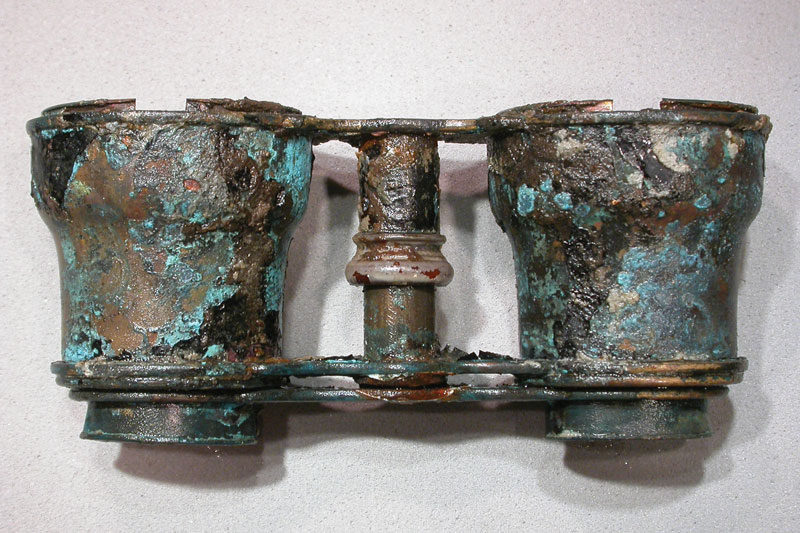
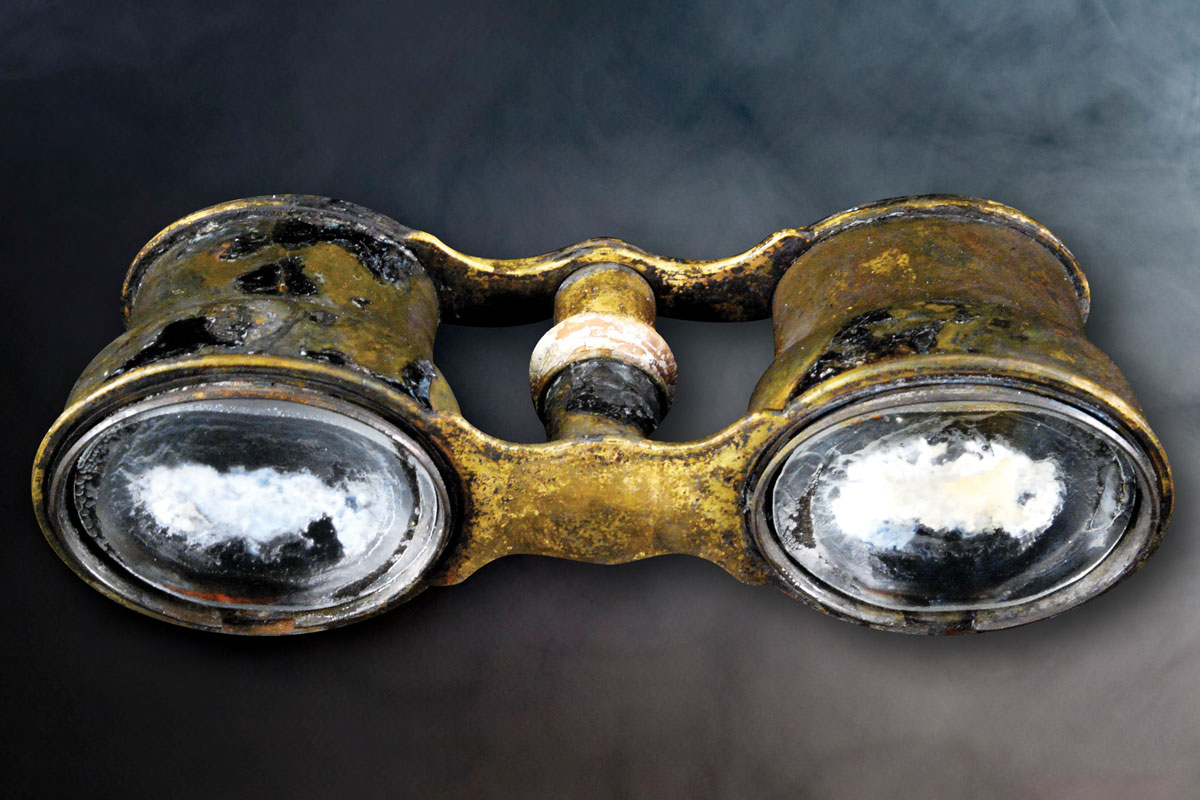
As Captain of the Hunley, Dixon’s binoculars were a critical tool. While still on land, he would use his binoculars to survey the Union blockade and select the best target. While commanding the submarine, he likely opened the forward hatch periodically to give the crew fresh air. Dixon no doubt took this opportunity to stick his head out through the conning tower and use the binoculars to help gain his bearings.
Before
After
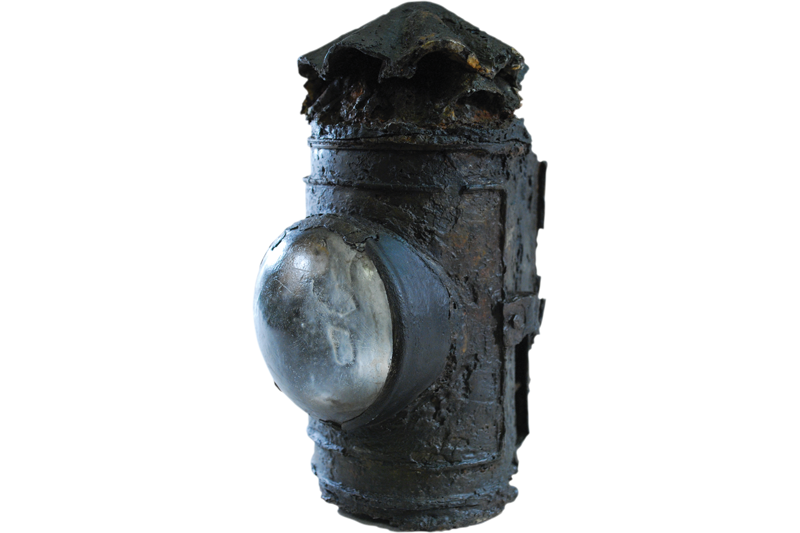
Lantern
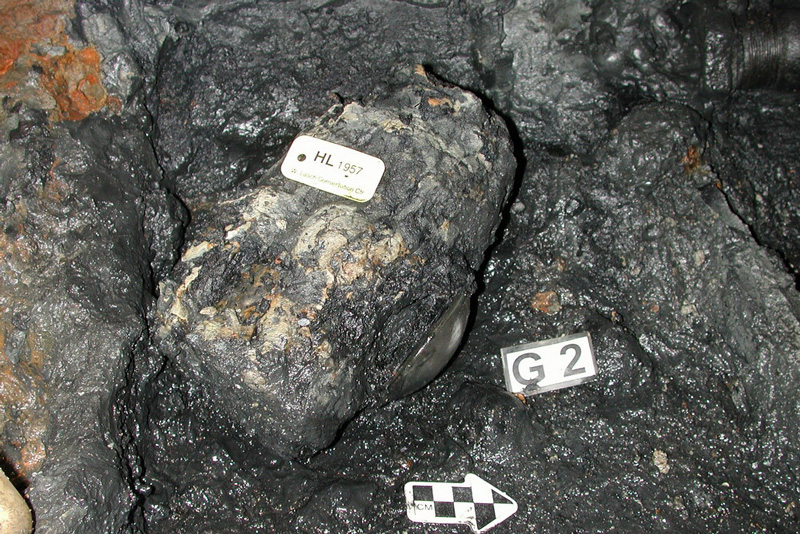
A signal light has long been a central event in the unsolved mystery of the Hunley’s disappearance. Hunley lore and historical records indicate the crew was to signal if they achieved their mission to take down one of the Union ships blockading Charleston harbor. Confederates on land would then light a fire to help guide the Hunley safely back to shore. Whether this lantern found in the crew compartment was used to signal or not is a matter of historical debate. Still, this fascinating artifact was so deteriorated, it is remarkable the lantern survived at all. It took conservators years of expertise—and patience—to save this extremely delicate piece of maritime history.
Before
After
Your donation will enable us to complete the HUNLEY’s journey. Also, FRIENDS OF THE HUNLEY is a charitable, 501(c)3 non-profit organization meaning your donation is tax deductible. We ask you to join us in preserving the HUNLEY. It will only be possible with your help.